
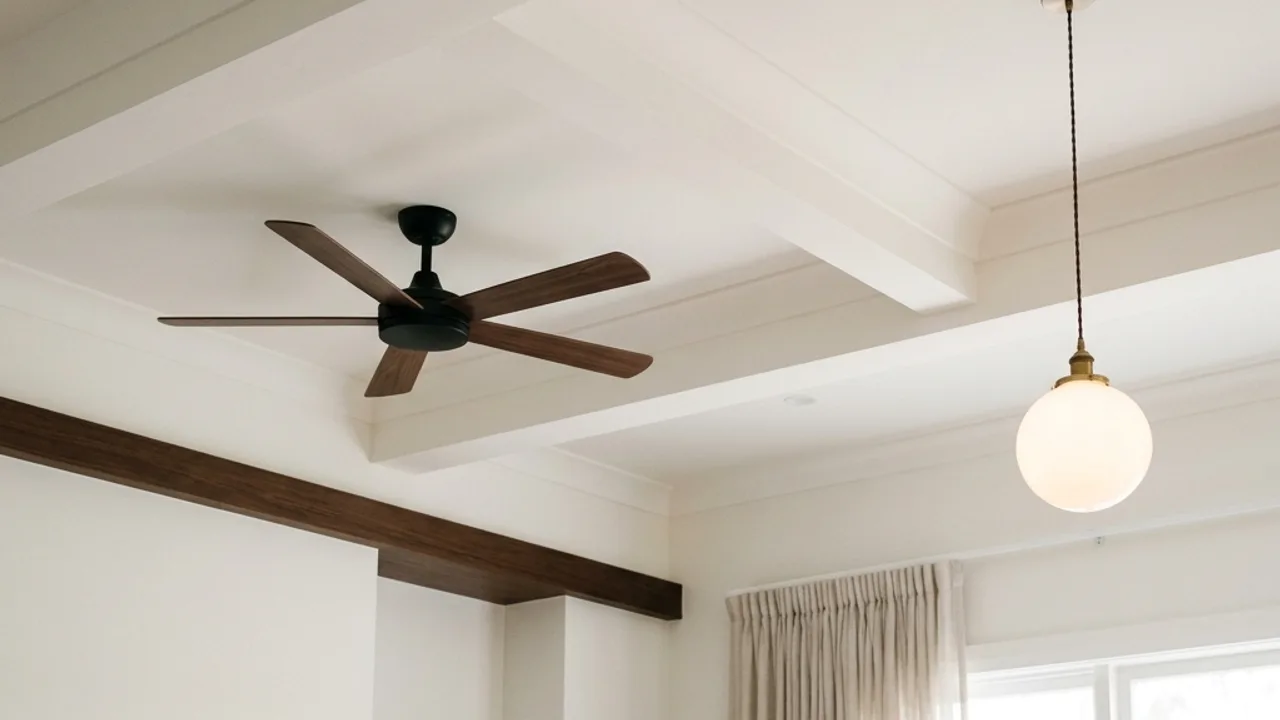
The room may look finished but still be awkward to use. A reading chair sits outside the useful light, a pendant makes the dining arrangement inconvenient, or a fan is no longer suited to the way the bedroom is used. Start with the comfort or practical improvement you want. That keeps product choice and installation work connected to a purpose, rather than making a catalogue fitting the brief by default.
Tell us what would make the room work better. A small replacement or a better-positioned fitting is a valid enquiry. You do not need to plan a full renovation. Mention the room, what is currently there and whether the request is a failed fitting, a new position or a planned improvement. The contractor can confirm the installation scope and product suitability before work is agreed.
Describe the activity before choosing the fitting
Think about what happens in the room: reading, cooking, working at a desk, relaxing or sleeping. Explain the point that feels uncomfortable or inconvenient in ordinary language. For lighting, that might be the place you need to see clearly rather than the place where the existing ceiling fitting happens to be. For a fan, it may be how the room is occupied and how you want to control it, rather than a claim about what size must work.
You can draw a simple room arrangement for your own conversation without determining wiring or installation suitability. Furniture position and intended use are useful context. They do not establish that a new fitting can go anywhere, that existing support is suitable or that a particular product will solve the problem. The lighting and ceiling-fan service guide keeps those installation questions with the contractor.
Keep a replacement distinct from a new position
A proposal to replace a fitting and one to move it can involve different work. Ask whether the quoted description is for the existing position, a new location or both. If the change involves controls, cable access or surface finishing, ask which parts are included and which depend on further assessment. A useful quote names the intended alteration rather than simply listing a fan or light model.
If the fitting has stopped working, the first question may be its cause rather than the product you prefer. Read the fault-finding guide when the enquiry begins with a failure. If trips or other symptoms are involved, the repeated-safety-switch-trip guide explains why they should not be treated as a diagnosis. A practical improvement and a fault investigation can share a room without being the same job.
Ask the licensed electrical contractor about supply and installation
Queensland’s Electrical Safety Office says installing power points, lights and ceiling fans requires a licensed person. Read its don’t DIY guidance, and use the licence search to check the actual contractor. Purchasing a fitting does not authorise you to connect it or establish that it is suitable for the installation. Leave fixed electrical work to the appropriate licensed person.
Before buying an owner-supplied product, ask whether the contractor is willing to install it and what information they need. Clarify how product suitability, missing components and later product questions would be handled under their terms. A cheap purchase can be inconvenient if the quoted work assumes something different. Do not infer a universal warranty arrangement or free return visit. Ask about the specific product-and-installation proposal.
Enquire about the room before committing to a product. If you have already purchased it, state the model and what is included, but keep the installation decision open until it has been assessed.
A unit adds access and responsibility questions
For an apartment, ask whether the proposed location or route involves shared areas or infrastructure. Queensland’s utility-infrastructure guidance explains that responsibility depends on the infrastructure and property arrangements. This guide cannot decide the responsibility for a particular ceiling, cable or fitting. The unit-work guide gives you a practical way to keep private work, access and authority separate.
If you rent, use the property’s reporting and approval arrangements before commissioning an alteration. The Residential Tenancies Authority (RTA) electrical-safety guidance is the official starting point for electrical issues in a tenancy. You can still describe the outcome you want, but an ordinary website enquiry is not the owner’s approval and does not replace the emergency route for a dangerous fault.
Compare the finished result, not a bare product line
When reviewing a proposal, look for the location, controls and installation work described, as well as the fitting itself. Ask about assumptions concerning access and making good. If the installer identifies other work, separate its purpose from your original improvement before authorising it. The quote-comparison guide applies that same principle to larger electrical proposals. It is useful even when your own job remains small.
Use the job checklist to keep the unanswered questions visible. The budget calculator can add your quoted amount, chosen allowance and contingency, but it does not predict installation costs from room size or suburb. If a new appliance or desk outlet is also planned, consult the power-point guide instead of assuming lighting work includes new circuit capacity.
Leave with a usable room and a clear record
Ask what documentation will describe the agreed work and how later questions should be raised. Keep the invoice and product details together, especially where you supply the fitting. If smoke-alarm work is also on the list, the smoke-alarm planning guide keeps that property’s requirements separate from decorative or comfort choices. Combining a visit should not blur why each item is being done.
The Indooroopilly property guide and broader location hub add sourced housing context without claiming an operator’s coverage. Describe the room and the improvement you want when you are ready. You can enquire about one fitting without committing to a larger project. The electrician confirms the visit, scope and price before work starts.