
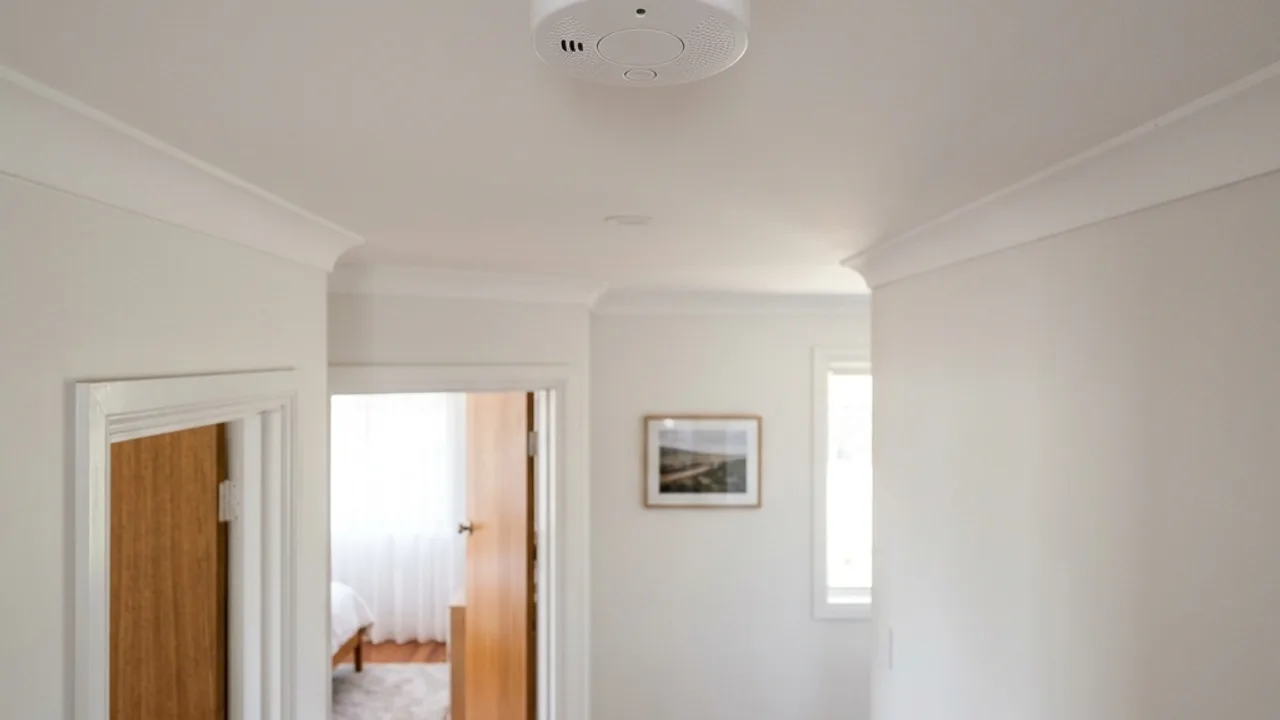
A smoke-alarm enquiry can begin with a deadline, a sale, a tenancy change or an alarm that no longer works. Those starting points are not interchangeable. Before choosing products or accepting a proposal, establish which property is involved and what question the work needs to answer. A useful scope considers the dwelling and current requirements, rather than offering a generic number of alarms based only on the suburb or the approaching date.
Describe the property and why you are planning the work. Say whether it is owner-occupied, rented, being sold or undergoing relevant building work. If an alarm is faulty, mention that separately. An ordinary message cannot establish whether your dwelling meets its smoke-alarm obligations, and it does not book an installation.
Check the current Queensland smoke-alarm guidance
The Queensland Fire Department states that existing private homes, townhouses, units and manufactured homes require interconnected photoelectric smoke alarms by 1 January 2027. Other obligations can arise sooner, including for selling or leasing and replacing expired or defective alarms. Read the current QFD smoke-alarm page rather than treating that date as permission to defer every property. The page distinguishes the circumstances and links to installation information.
Avoid turning a general deadline into an individual certification. A dwelling’s layout, existing alarm arrangements and relevant property circumstances still matter. If you are unsure which requirements apply, ask for a property-specific assessment. Our smoke-alarm service guide keeps the enquiry focused on the installation question and official sources, without claiming a particular product pack is automatically sufficient.
Describe the dwelling without guessing the design
Give the contractor useful background: dwelling type, storeys, room arrangement if known, existing alarms and the reason for the enquiry. State whether you know the present power or interconnection arrangement, but do not guess. You should not open wiring or remove equipment to complete the enquiry. A description or photograph can help orient the discussion without replacing the assessment needed to confirm a design or installation scope.
If a quoted product list arrives before the property has been adequately understood, ask what it assumes. Does the proposal identify the areas involved and explain what will be confirmed before work? How will a change to the planned installation be priced and approved? These are ordinary scope questions, not an attempt to design the system yourself. The job checklist can help you keep the unresolved questions visible.
Keep fixed electrical work with a licensed electrical contractor
QFD’s guidance distinguishes hardwired alarms, which require installation by a licensed electrician, from eligible battery-powered arrangements. A battery product is not a blanket solution for every property. See the QFD installation guidance, and consult the Electrical Safety Office’s don’t DIY guidance where fixed electrical work is involved. Check the actual contractor through the official licence search.
Ask who supplies the proposed equipment and how suitability will be established before purchasing it yourself. If you already own products, state the model information and leave the installation decision open. A product purchase does not prove that the complete dwelling arrangement is appropriate. The lighting-and-fan guide makes a similar distinction between buying a fitting and agreeing the work required to install it.
Send a smoke-alarm planning enquiry with what you know. You do not need to select every product first or turn your question into a larger renovation request. Keep the reason for the work and any property timing clear so the discussion can address the actual decision.
For a rental or a unit, establish the approval route
For rented premises, use the property’s reporting and approval arrangements rather than assuming a tenant’s ordinary enquiry commissions work. QFD separates landlord and renter responsibilities on its smoke-alarm page. The Residential Tenancies Authority (RTA) electrical-safety guidance is also relevant where an electrical fault is reported. Ask the owner or manager how access, approval and communication with the contractor will be handled.
For a unit, distinguish the dwelling’s proposed alarm work from any shared-infrastructure question. The unit-work guide explains why access, what equipment serves and authority to work need separate attention. Do not assume a proposed alarm installation is building-wide simply because it is in an apartment. Equally, do not promise access to restricted or shared equipment that you cannot authorise.
Compare the proposed work and completion records
A useful quote identifies the installation, supply arrangements, access assumptions and any exclusions. Ask what will be checked at completion and what records will describe the work. If a sale, tenancy process or building approval is involved, identify what information the relevant person needs rather than asking the website to produce an unspecified certificate. The contractor’s documentation and the property’s obligations should be discussed directly with the appropriate people.
The quote-comparison guide helps separate named work from optional changes and approval for extras. If you want a planning total, the budget calculator adds only your own quoted figures and allowances. It does not estimate the required alarm count, determine a compliance price or certify a system. Do not treat an allowance in that calculation as authority for extra installation work.
Keep unrelated electrical problems visible
If the enquiry also concerns a failed fitting or a recurring trip, list that separately so it is not lost inside the alarm proposal. The repeated-trip guide and fault-finding page address symptoms and assessment scope. A convenient combined visit does not establish that all issues have one cause or that one quoted item resolves them all.
The Indooroopilly property guide adds sourced housing context, while the location hub covers surrounding western Brisbane localities without claiming provider coverage. Start with your property’s smoke-alarm question when you are ready. A suitable independent provider must still be available, and any assessment, price, timing and work agreement remain decisions between you and that contractor.